
The Drama Triangle
Getting caught up in drama is easily done when everyone else is to blame


I first came across The Drama Triangle 5 years ago when I started delivering a leadership course for international students, developed by Friends International. Its a model to help analyse relational dynamics during conflict developed by Dr Stephen Karpman in 1968. It has now come up in a supervision course I took late last year and again in the coaching course I’m currently in. I’ve found it a helpful model for self reflection of both my roles and the roles of others in conflicts I’ve experienced.
What is the drama triangle?
Each point of the triangle represents three roles, Victim, Persecutor, and Rescuer. These roles could be taken up by one person, multiple people, or in the case of the persecutor, circumstances.
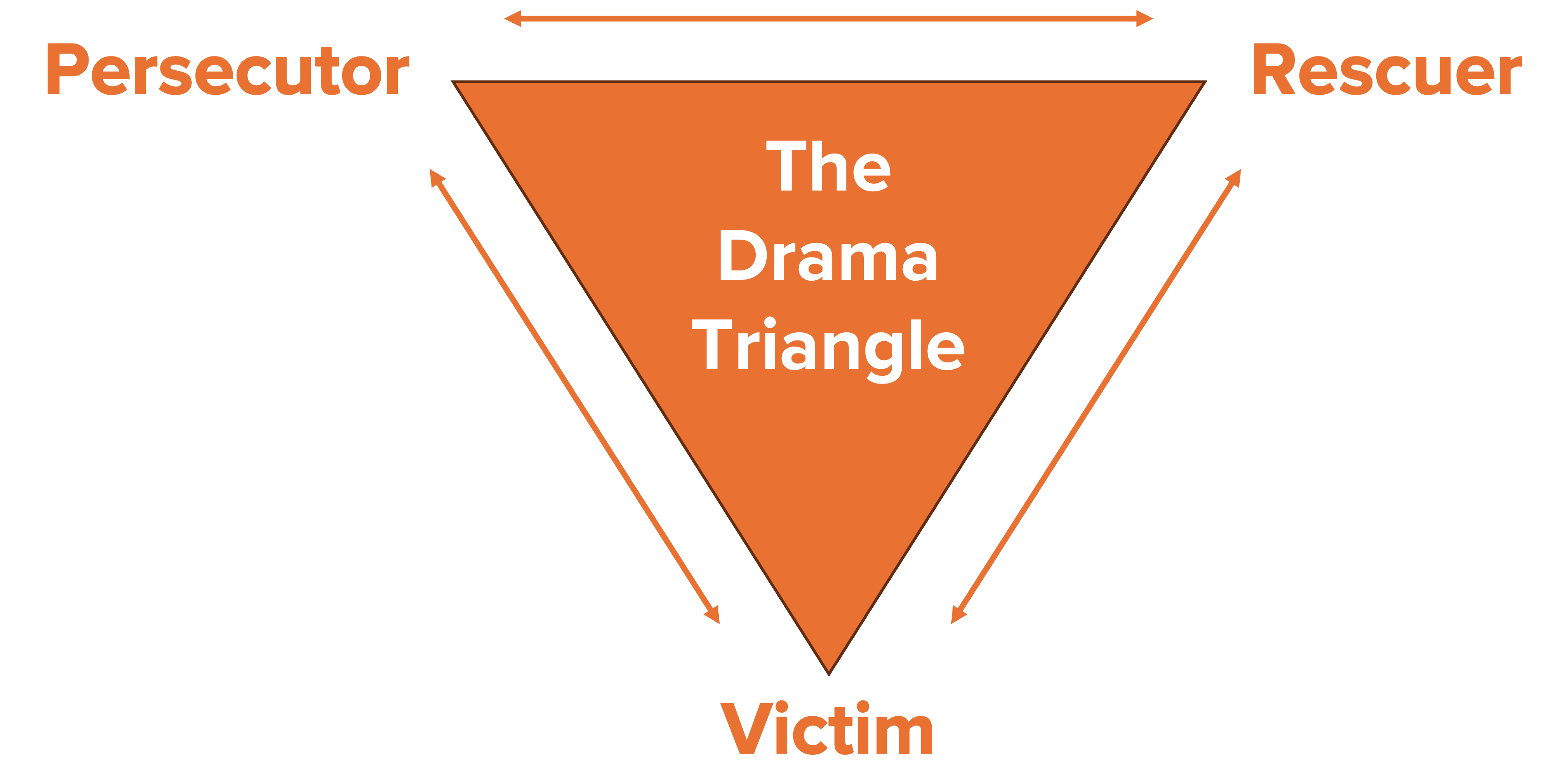
Each role has a particular stance or view on the world.
Victim: “Poor me” - The victim blames circumstances or others for a situation or conflict and believes themselves to be powerless and/or oppressed.
Rescuer: “Let me help you!” - The rescuer enables the victim to remain in this stance and tries to solve all their problems for them.
Persecutor: “Its all your fault!” - The persecutor piles on pressure, is overly critical, patronising, and always right.
We can see these stances play out in different ways but as a summary, each role is either deflecting responsibility or, in the case of the rescuer, taking on responsibility in an unhelpful manner.
Please note! This isn’t to say that people aren’t victims of circumstance or other people’s behaviour, and the language of ‘victim’ has changed since the 1960’s. When I’ve taught this, students have found other phrases or words to summarise this mentality and several have come across Carol Dweck’s “Fixed Mindset” as a similar concept. Whatever phrase or word we use to describe this position, it is one of lacking self-belief and a position of “the world is out to get me”.
Take a moment and think of a difficult situation or conflict you’ve had in the past. What was your role in it? Did you have more than one role?
Much more can and has been written about this triangle and I’ll be discussing it more on this blog in due course but hopefully that has shared just enough to have a basic idea of how it plays out in everyday relationships.
Escaping the drama
One response to the drama triangle is called “The Empowerment Dynamic” which was developed by David Emerald which quite literally flips the triangle.
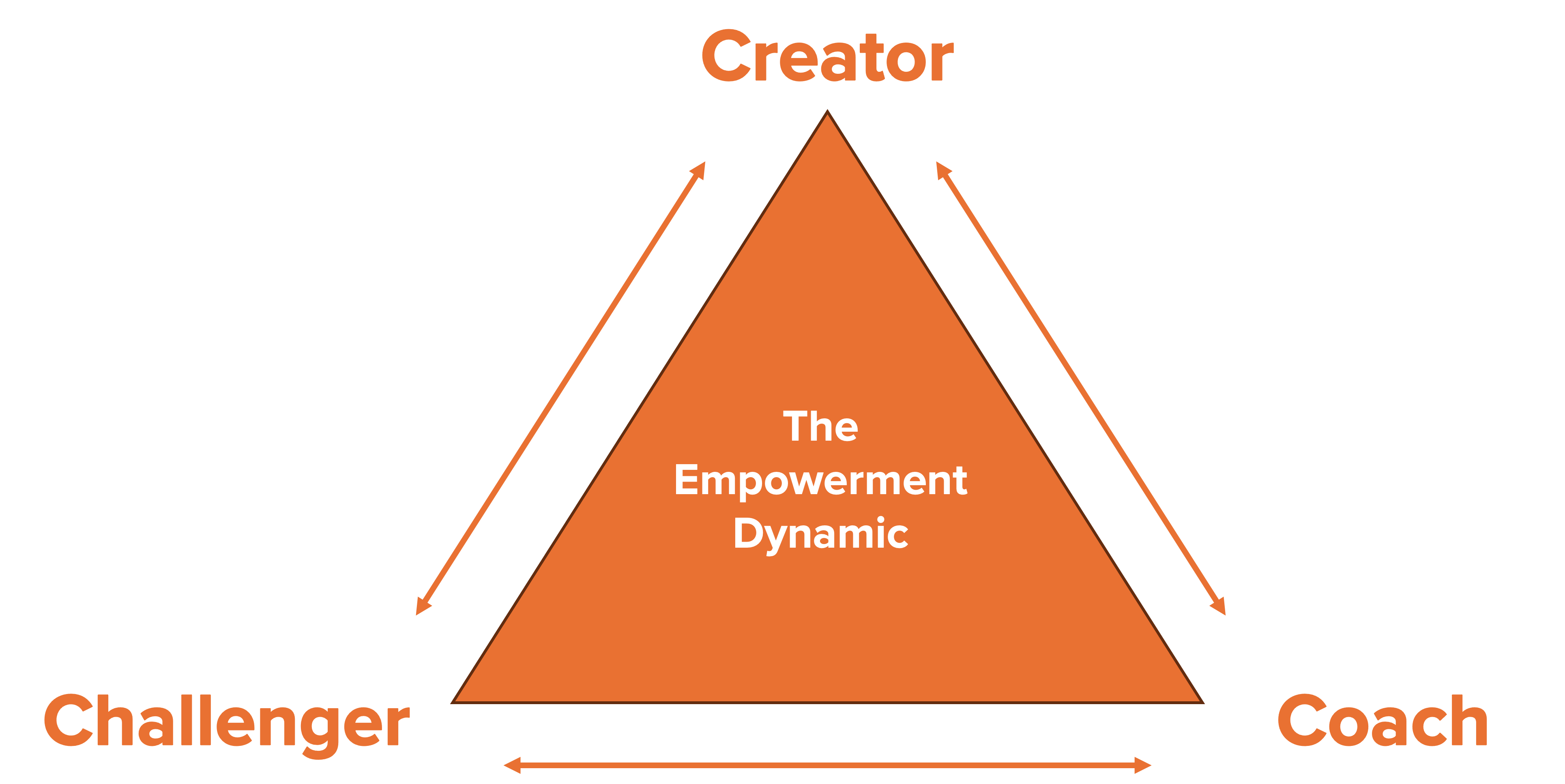
The stances change to the following:
Creator: “What do I want?” - Recognises what can and can’t be controlled, accepts that bad stuff happens, and looks for desired outcomes as opposed to fixating on the problem.
Coach: “What have you tried, what are your options, what can you commit to going forward?” - The coach recognises the agency of the creator to self-solve. Rather than advising and doing things for the creator, the coach asks questions and doesn’t take responsibility for the creator’s problem.
Challenger: “How can you learn from this?” - The challenger is a catalyst for change, seeking to further growth by building up, recognising the need for standards to be upheld, but challenging to build others up rather than from a place of superiority and a need to put others down.
In each role, a person manages their responsibilities without taking on what isn’t theirs or deflecting from their own problems. We often can’t change the difficult situations we find ourselves in, but we can accept what can’t be controlled, and look for solutions that provide an outcome that makes the best of the situation.
Reflecting back on a prior difficult situation or conflict, how could you respond in a way that reflects The Empowerment Dynamic? Can you reframe something that is difficult into something that can be learnt from?
Resources:
Escaping the Drama Triangle (PDF) by University of South Carolina Human Resources
Relevant posts:


